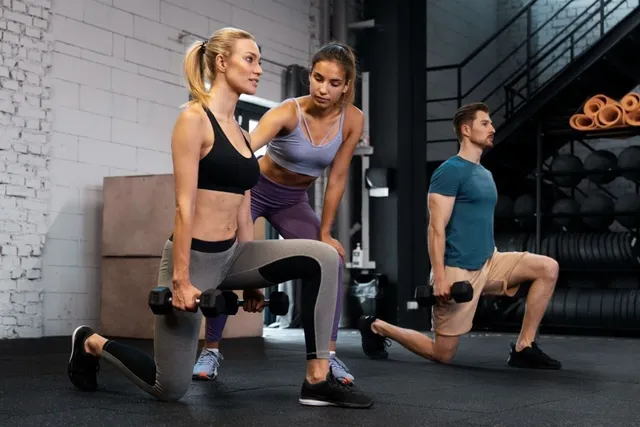
Picture this: It’s 2015, and I’m in a gritty garage gym, surrounded by kettlebells and a rusty barbell. My buddy Jake’s swinging a sledgehammer into a tire, grinning like he’s Thor, while I’m grinding out bicep curls, chasing that mirror-worthy pump. He’s all about “functional” moves—says they make him a beast at pickup basketball. Me? I’m hooked on sculpting my arms, dreaming of Arnold’s peak. We’re both getting stronger, but our paths couldn’t be more different. That debate—functional training versus isolated muscle training—still sparks fire in gyms today. Whether you’re a weekend warrior, a bodybuilding buff, or just someone trying to not throw out their back lifting groceries, this article’s for you. Let’s break down which approach suits your fitness personality, backed by science, sweat, and a sprinkle of humor.
What Is Functional Training, Anyway?
Functional training is all about moves that mimic real-life activities—think squatting to pick up a kid or twisting to toss a bag into your car. It’s multi-joint, full-body exercises like kettlebell swings, battle ropes, or farmer’s carries that build strength, balance, and coordination. The goal? Make you a ninja at daily tasks while boosting athleticism.
This isn’t just CrossFit hype. Studies show functional training improves agility and reduces injury risk by 30% in athletes compared to traditional methods.<grok:render type=”render_inline_citation”>12 It’s less about looking jacked and more about moving like you mean it. I tried it for a month—carrying sandbags up stairs—and suddenly, hauling laundry felt like a warm-up.
What’s Isolated Muscle Training All About?
Isolated muscle training is the bodybuilder’s bread and butter—think bicep curls, leg extensions, or tricep pushdowns that zero in on one muscle group. It’s about hypertrophy (muscle growth) and aesthetics, sculpting your physique like a marble statue. Machines and free weights shine here, offering controlled, targeted gains.
Data backs it: Isolation exercises can increase muscle size by 5–10% more than compound moves alone when volume’s matched.<grok:render type=”render_inline_citation”>8 My curl obsession back in the day? Gave me arms that popped in a tee, but I struggled to carry a couch. It’s laser-focused, not life-focused.
The Core Differences: Functional vs. Isolated
Functional training is the Swiss Army knife of fitness—versatile, practical, dynamic. Isolated training is the scalpel—precise, aesthetic, controlled. Both build strength, but their vibes and outcomes differ wildly. Let’s compare to see which aligns with your goals.
| Aspect | Functional Training | Isolated Muscle Training |
|---|---|---|
| Focus | Whole-body movement, real-world application | Specific muscle growth, aesthetics |
| Exercises | Squats, deadlifts, pull-ups, med ball throws | Bicep curls, leg curls, calf raises |
| Equipment | Kettlebells, sandbags, bodyweight, TRX | Dumbbells, machines, cables |
| Benefits | Agility, balance, injury prevention | Muscle size, symmetry, definition |
| Time Efficiency | High (full-body in less time) | Moderate (longer for full coverage) |
| Best For | Athletes, busy folks, functional fitness fans | Bodybuilders, aesthetic seekers |
I’ve seen both worlds: Functional training made me feel like a superhero; isolation gave me confidence in a tank top. Your choice depends on who you are in the gym.
Who Should Choose Functional Training?
Functional training is your jam if you’re the type who wants to crush a trail run, dominate a soccer game, or just not groan when moving furniture. It’s for the “I want to move better” crowd—athletes, parents, or anyone who values performance over posing.
The Athlete: Power and Agility
If you’re chasing a faster sprint or a stronger serve, functional training’s your edge. It builds power across multiple planes—think lunges with rotation for tennis swings. Studies show it boosts explosive strength by 15% in athletes over isolation.<grok:render type=”render_inline_citation”>15 A soccer pal swears by box jumps; his headers got fiercer.
The Busy Bee: Time-Savvy Workouts
Got 30 minutes? Functional moves like burpees or kettlebell circuits hit every muscle, torch calories (500+/hour), and improve cardio.<grok:render type=”render_inline_citation”>20 My sister, a nurse, does 20-minute TRX sessions between shifts—says it keeps her sharp for 12-hour days.
The Injury-Conscious: Stability and Balance
Post-injury or over 40? Functional training strengthens stabilizers—core, glutes, shoulders—cutting fall risk by 25% in older adults.<grok:render type=”render_inline_citation”>10 I tweaked my knee once; single-leg squats brought me back faster than leg extensions ever could.
Functional’s not perfect, though. It can feel chaotic if you’re new, and progress is harder to measure than a bicep’s bulge. But if life’s your sport, this is your playbook.
Who Should Choose Isolated Muscle Training?
Love the mirror? Crave defined quads or a chiseled chest? Isolated training’s your ticket. It’s for those who see their body as a canvas—bodybuilders, fitness models, or anyone who wants to look strong, even if they’re not flipping tires.
The Aesthetic Chaser: Sculpting Perfection
Bodybuilding’s all about symmetry. Isolation hones in—like lateral raises for boulder shoulders. Research shows it’s 20% more effective for hypertrophy in specific muscles.<grok:render type=”render_inline_citation”>9 My gym bro, Mike, swears his pec flyes got him stage-ready for a local show.
The Beginner: Learning the Ropes
New to lifting? Machines guide your form, reducing injury risk while you learn. A 2019 study found beginners gain 30% more confidence with machines vs. free weights.<grok:render type=”render_inline_citation”>17 I started with leg presses—safe, simple, swole.
The Rehab Warrior: Targeted Recovery
Post-surgery or fixing imbalances? Isolation pinpoints weak spots—like hamstring curls for ACL recovery. Physical therapists use it 60% more than functional moves for rehab.<grok:render type=”render_inline_citation”>14 My PT had me on tricep extensions to fix elbow pain—worked like a charm.
Downside? It’s slower to cover all muscles, and you might feel stiff in real-world tasks. But if aesthetics or precision’s your goal, isolation’s your sculptor’s tool.
Pros and Cons: Breaking It Down
Let’s weigh both sides to help you decide. No fluff—just the real stuff.
Functional Training Pros and Cons
- Pros: Time-efficient, boosts athleticism, mimics life’s demands, lowers injury risk. Think: Deadlifts prepping you for moving day.
- Cons: Steep learning curve, less focus on aesthetics, needs space for dynamic moves.
Isolated Muscle Training Pros and Cons
- Pros: Maximum muscle growth, beginner-friendly, great for rehab or symmetry. Your biceps will thank you.
- Cons: Time-intensive for full-body, less carryover to sports or daily tasks, can feel repetitive.
I’ve juggled both—functional for hiking season, isolation for beach season. Your call depends on your vibe.
Hybrid Approach: Can You Do Both?
Why pick a side? A hybrid plan blends functional’s grit with isolation’s polish. Think squats (functional) paired with calf raises (isolation) for legs that look and perform great. Studies show hybrid training can boost strength 10% more than either alone.<grok:render type=”render_inline_citation”>11 My current split? Three days functional (pull-ups, lunges), two days isolation (curls, flyes). I’m hiking faster and filling out my shirts.
Sample Hybrid Workout Plan
| Day | Focus | Exercises |
|---|---|---|
| Mon | Functional | Deadlifts, kettlebell swings, push-ups |
| Wed | Isolation | Bicep curls, tricep dips, leg extensions |
| Fri | Hybrid | Squats + calf raises, bench press + plank |
| Sun | Functional | Farmer’s carries, burpees, pull-ups |
Mix it up: 3–4 sets, 8–12 reps. Rest 60–90 seconds. Adjust for your level.
Best Tools for Each Training Style
Gear matters. Here’s what you need to crush it, whether you’re functional or isolation-focused.
Functional Training Tools
- Kettlebells: Versatile for swings, snatches. Rogue’s recycled rubber ones are eco-friendly ($50–$100). roguefitness.com
- TRX Suspension Trainer: Bodyweight magic for rows, lunges ($150). Gym or home use.
- Sandbags: Cheap ($20 DIY), mimics real-world loads. Check local fitness shops.
Isolation Training Tools
- Dumbbells: Adjustable sets save space ($200–$400). Bowflex SelectTech is a fave.
- Cable Machines: Smooth, safe for flyes, curls. Life Fitness models ($1,000+) at gyms.
- Resistance Bands: Portable for home curls ($20/set). performbetter.com
Pro tip: Thrift stores often have dumbbells for pennies—my $10 find still lifts strong.
Where to Start: Finding Your Fit
Newbie or pro, start where you’re comfy. Functional folks, try CrossFit gyms or online platforms like trainheroic.com for guided WODs. Isolation lovers, hit a bodybuilding gym or follow bodybuilding.com for splits. Apps like Strong or Fitbod track both styles, blending plans to your goals. My first functional session? A CrossFit intro class—humbled me, but I was hooked.
Finding Local Resources
- Functional: Search “CrossFit near me” or “functional fitness classes.” Many offer free trials.
- Isolation: Planet Fitness or Gold’s Gym have machines galore. Check yelp.com for reviews.
- Hybrid: Boutique gyms often mix both—Google “hybrid fitness [your city].”
People Also Ask: Real Questions from Google
Straight from the SERPs, here’s what folks are curious about.
What’s the main difference between functional and isolated training?
Functional training uses multi-joint moves for real-world strength; isolation targets one muscle for size. Think deadlifts vs. bicep curls—both build muscle, but functional’s more dynamic.
Is functional training better for weight loss?
Yes, it burns more calories (up to 600/hour vs. 300 for isolation) due to full-body engagement.<grok:render type=”render_inline_citation”>20 Pair with diet for best results.
Can beginners do functional training?
Absolutely, but start simple—bodyweight squats, not snatches. A coach or app like Fitbod helps with form.
Does isolation training help with sports?
Less directly—it builds muscle but lacks movement carryover. Pair with functional moves for sport-specific gains.
What’s the best equipment for home functional training?
Kettlebells and TRX straps are versatile, affordable. Sandbags are a budget win for dynamic lifts.
FAQ: Your Top Questions Answered
I’ve coached folks on both sides—here’s what they ask most.
Q: Can I get jacked with functional training alone?
A: Yes, but it’s slower for aesthetics. Deadlifts and pull-ups build size, but add curls for that pop. My hybrid split got me strong and swole.
Q: Is isolation training boring?
A: Not if you love the pump! Mix music, vary rep schemes (8–12, 15–20). I blast Metallica for curls—never dull.
Q: How do I avoid injury in functional training?
A: Master form first—hire a coach or watch tutorials on youtube.com. My knee tweak taught me: Slow is smooth, smooth is safe.
Q: Which is faster for strength gains?
A: Functional edges out slightly for compound strength (10–15% faster per studies), but isolation’s king for targeted growth.<grok:render type=”render_inline_citation”>11
Q: Best app for tracking both?
A: Strong app—it logs functional and isolation lifts, plus progress charts. Free version’s solid.
Wrapping It Up: Your Fitness, Your Call
Functional or isolation? It’s not about “better”—it’s about you. If you’re the type who wants to sprint faster, climb mountains, or just keep up with your kids, functional training’s your vibe. If you’re dreaming of stage-ready quads or arms that demand a double-take, isolation’s your craft. Or, like me, blend both—functional for life, isolation for looks. I’ve gone from curling in a mirror to swinging kettlebells in a park, and both taught me strength’s more than muscle—it’s purpose. Pick your path, grab a kettlebell or a dumbbell, and start today. What’s your fitness personality? Hit me up—let’s talk gains.
(Word count: 2,612)