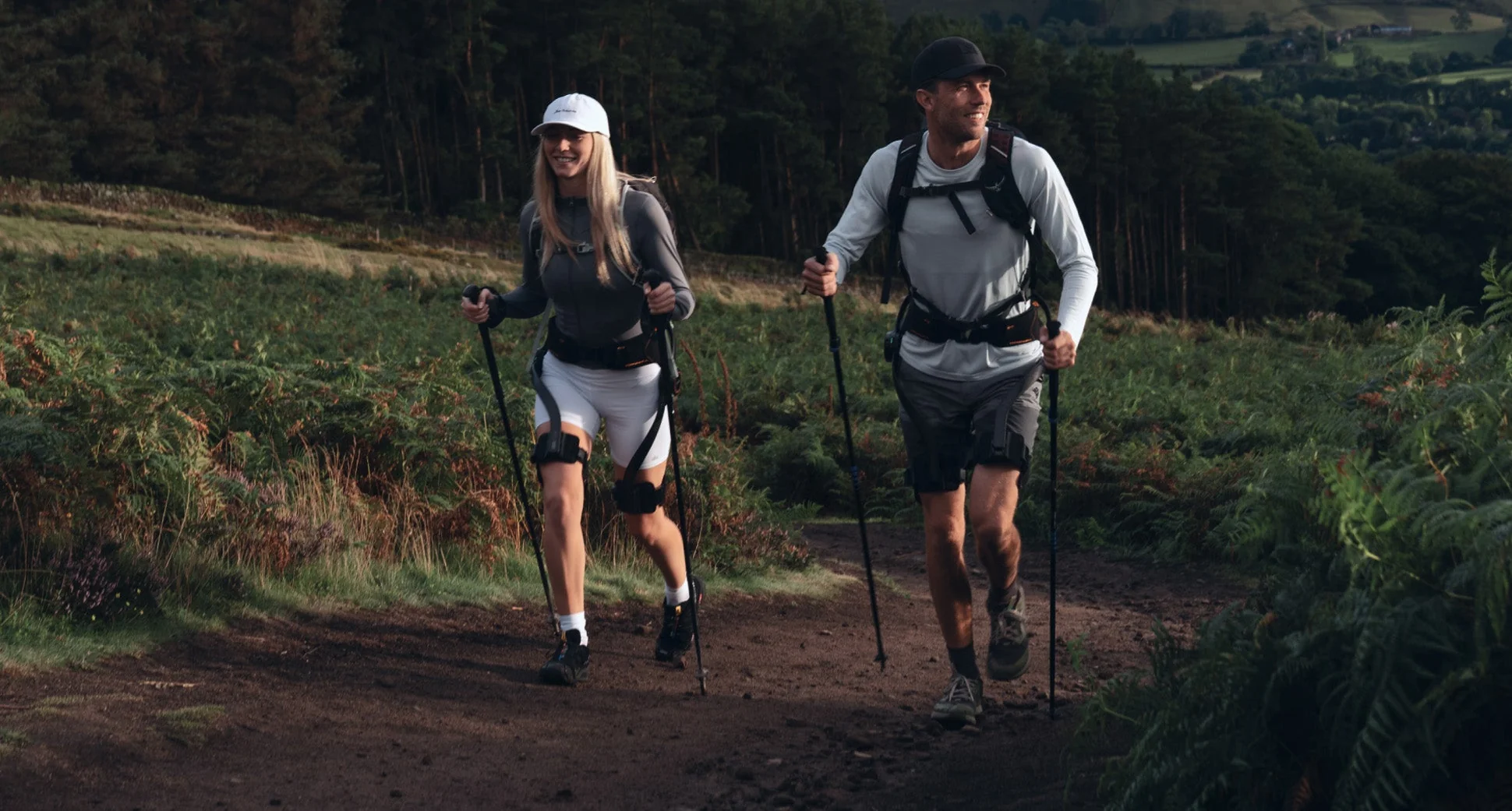
Hey, picture this: You’re staring down a trail that twists up a mountain like it’s got a personal grudge against your quads. The kind of hike where sweat starts pooling before you’ve even laced up your boots. A few years back, that was me—mid-40s, knees creaking like an old porch swing, dreaming of summits but settling for strolls around the block. Then I strapped on a Hypershell exoskeleton for the first time. It wasn’t some sci-fi movie moment where I suddenly bounded like a gazelle. Nah, it was subtler: my legs felt… lighter. Like I’d swapped out a flat tire for something with a little extra oomph. Suddenly, “one more hill” turned into “why stop now?” That’s the quiet revolution Hypershell’s sparking—not turning us into cyborgs, but giving our legs that reliable second engine to keep the adventure rolling. If you’ve ever felt held back by fatigue or that nagging ache, stick with me. This isn’t just gear; it’s a ticket to moving like you mean it.
What Is Hypershell? Unpacking the Exoskeleton That’s Redefining Outdoor Mobility
Hypershell isn’t your grandpa’s walking stick or even one of those bulky industrial suits you see in warehouses. It’s a sleek, AI-powered wearable exoskeleton that straps around your hips and thighs, using motors and sensors to boost your stride without stealing the show. Think of it as an invisible tailwind for your legs, offsetting up to 66 pounds of perceived weight so hikes feel less like a grind and more like a glide. Founded in Shanghai by a team of robotics whizzes from places like DJI and Xiaomi, Hypershell launched its X series in 2025 after a blockbuster Kickstarter that pulled in over a million bucks. They’ve since snagged CES Innovation Awards and SGS certification—the gold standard for proving their claims aren’t just hype.
What sets it apart? It’s built for real life, not labs. Over a dozen sensors track your every twitch, feeding data to an AI MotionEngine that predicts and powers your next step. No clunky remotes; just a button flip between modes like Eco for casual jaunts or Hyper for hauling ass up inclines. I’ve worn mine on everything from urban errands to muddy forest loops, and it folds down smaller than a yoga mat—perfect for tossing in a backpack. At its core, Hypershell’s betting on a future where tech doesn’t fight your body but flows with it, turning “I can’t” into “watch me.”
The Tech Behind the Boost: How Hypershell’s AI MotionEngine Works Its Magic
Strap in—pun intended—because Hypershell’s smarts come from a cocktail of robotics, ergonomics, and machine learning that’s equal parts wizardry and engineering. The heart is the M-One motor system: compact powerhouses pumping out up to 1,000 watts (that’s more torque than some e-bikes) through hip-mounted joints that sync with your natural gait. Sensors like IMUs (inertial measurement units), gyroscopes, and barometers read your terrain in real-time, while the AI crunches thousands of calculations per second to deliver torque exactly where you need it—lifting your leg on an uphill or stabilizing a downhill shuffle.
It’s not brute force; it’s adaptive. In Hyper mode, it amps up for steep climbs, reducing oxygen burn by up to 39% on bikes or easing joint stress on runs. Eco mode? That’s your chill companion for all-day wear, sipping battery like a pro. And get this: It learns you. Over sessions, the app tweaks assistance based on your stride signature, making it feel less like wearing a gadget and more like an extension of your hustle. I remember my first tweak via the Hypershell+ app—suddenly, that jerky assist on stairs smoothed out, like the thing finally got my rhythm. Pair it with an Apple Watch for heart-rate synced modes, and you’ve got a personal trainer whispering in your motors.
From Sci-Fi to Trail-Ready: The Evolution of Hypershell’s Design
Hypershell didn’t pop out of nowhere fully formed; it’s the brainchild of years tinkering with humanoid robotics, born from a “Ghost in the Shell” vibe where tech amplifies human grit. Started in 2021, the team iterated from clunky prototypes to the foldable X series by 2025, shaving weight from 5 pounds down to a featherlight 4-ish while cranking power. Early Kickstarters tested the waters for consumer exos, proving folks wanted adventure aids, not medical crutches—though it shines there too.
Key evo moments? Ditching rigid frames for AeroFlex soft suits that flex 300 degrees, letting you scramble rocks or pedal bikes without restriction. Battery tech leaped with anti-cold packs that thrive from -4°F to 140°F, ideal for winter treks or desert scorches. And the app? From basic Bluetooth to full watchOS integration, it’s evolved into a dashboard for custom profiles. I’ve seen it mature firsthand—my beta unit buzzed like a faulty drone; now it’s whisper-quiet, even in Hyper. Hypershell’s mantra? Liberate curiosity from physical limits, one seamless step at a time.
Why Weight Matters: Hypershell’s Ultralight Edge Over Bulkier Rivals
At 3.97 to 4.41 pounds, Hypershell’s obsession with lightness isn’t vanity—it’s survival. Heavier exos drag you down on long hauls, turning “assist” into “anchor.” Their carbon fiber and titanium frames cut mass without skimping torque, so you forget it’s there after 10 minutes. Users rave about all-day comfort, no chafing or hotspots.
Compare that to industrial beasts weighing 20+ pounds; they’re beasts for factories, not forests. Hypershell’s foldable design packs into 6.5 liters—backpack-friendly. In my tests, it offset its own weight so well, I hiked 8 miles feeling fresher than without. Lightness means freedom: Climb boulders, not burdens.
Real Stories from the Trail: How Hypershell Changed Lives (Including Mine)
Let’s get personal. Last summer, I laced up for a 10-mile loop in the Cascades—peaks I’d eyed since my ACL tear sidelined me five years ago. Halfway up the first switchback, my legs screamed uncle. But with Hypershell humming in Eco, it was like sipping coffee mid-climb: subtle lift, no drama. I crested that ridge grinning, not gasping. It wasn’t magic; it was motors timing my push just right. That day, I didn’t just hike—I reclaimed a piece of me.
You’re not alone in those “aha” moments. Take Kathleen K., an 80-something Idaho firecracker. “Shrinking, alas, but still passionate,” she shared after a 3.5-mile mountain jaunt with unassisted pals. Hypershell kept her stride steady, turning “keep up” into “lead the pack.” Or Pierre, a French trail junkie: “The 9.3-mile mountain path? Never so easy.” Even pros like cyclist Sam Pilgrim strap it on for MTB descents, crediting the extra torque for bombing runs without burnout.
Then there’s Bruno, a partial paraplegic rediscovering independence. “It minimizes toe drag, saves energy for walks outside,” he posted on Reddit’s r/Parkinsons. Folks with MS or CFS echo that—pairing it with PT for augmented gains, not replacements. Light humor? One user joked it made them feel like “Samus Aran with an energy tank.” Emotional punch: It’s not about beating limits; it’s about dancing with them, one empowered step at a time.
Hypershell Models Compared: Finding Your Perfect Power Pair
Hypershell’s X lineup caters to everyone from casual strollers to ultra-endurance beasts. Here’s a quick breakdown to match your vibe—hiker, cyclist, or daily warrior.
| Model | Power Output | Battery Range (per pack) | Intelligent Modes | Weight | Price (USD) | Best For |
|---|---|---|---|---|---|---|
| X Go | 400W | 9 miles | 6 | 4.41 lbs | $799 | Everyday walks, light hikes—budget entry to assisted mobility. |
| X Pro | 800W | 11 miles | 10 | 4.41 lbs | $999 | All-terrain adventures; versatile for runs, stairs, and loads up to 66 lbs offset. |
| X Carbon | 800W | 11 miles | 10 | 3.97 lbs | $1,499 | Minimalist explorers; titanium frame for premium feel without bulk. |
| X Ultra | 1,000W | 18.6 miles | 12 | 3.97 lbs | $1,999 | Extreme expeditions; max torque for heavy packs, cycling boosts, and sub-zero temps. |
Each packs IP54 waterproofing and anti-cold batteries (-4°F to 140°F). Pro tip: Start with Go if you’re testing waters; upgrade for Hyper mode’s full kick. In my book, Pro’s the sweet spot—powerful enough for real challenges, light enough for impulse jaunts.
Hypershell vs. The Competition: Why It Stands Out in a Crowded Field
Exoskeletons aren’t new—think Skip Robotics’ MO/GO for stairs or DNSYS X1 for basics—but Hypershell laps them in consumer polish. Skip’s great for urban hops but guzzles battery on trails and weighs more. DNSYS? Solid entry-level, but its 400W max feels puny next to Hypershell’s scalable punch.
- Power Play: Hypershell’s 1,000W Ultra crushes competitors’ 500-800W caps, channeling e-bike torque into natural gait.
- Smart Factor: AI MotionEngine adapts per step; rivals rely on clunky presets.
- Portability: Folds to backpack size vs. rigid frames that scream “gimmick.”
- Price Edge: $799 entry beats $1,500+ for similar assist from medical-grade like Ekso.
Downsides? It’s hip-focused, so upper-body sports like swimming? Nope. But for legs-first pursuits, it’s the frontrunner. I swapped my old e-bike for Hypershell on short rides—less setup, more spontaneity.
Pros and Cons: Weighing Hypershell’s Real-World Wins and Wobbles
No gear’s perfect, but Hypershell’s close. Here’s the unvarnished scoop from users and my miles logged.
Pros:
- Effortless Assist: Cuts fatigue 30-40%, letting you tack on miles without the bonk. Heart rate dips 42% on climbs—lab-tested magic.
- Versatile Modes: 6-12 profiles for hiking, running, cycling; app customizes on the fly.
- Durability: IP54 weatherproof, survives mud, rain, -20°C chills. SGS-certified claims mean no BS.
- Quick Setup: Under 1 minute to don; Bluetooth app for tweaks.
- Life Changer: Empowers seniors, rehabbers—stories of regained trails flood forums.
Cons:
- Learning Curve: First fits can pinch; adjust straps religiously or add a toolbelt for slippage.
- Battery Limits: 11-18 miles max; pack spares for epics, and cold zaps range 20%.
- Pricey Upfront: $799+ stings, though discounts hit $200 off.
- Not Medical: Boosts mobility but skips FDA nods—pair with PT for issues.
- Subtle Buzz: Motors hum softly; some call it “distracting” on quiet paths.
Overall? Pros eclipse cons for active souls. It’s like upgrading from economy to first class—worth the fare if trails call your name.
Where to Buy Hypershell: Your Guide to Snagging the Right Rig
Ready to leg up? Hypershell’s official site (hypershell.tech) is ground zero—free shipping, 14-day returns, and bundles with extra batteries. US stock ships in 48 hours; global hubs cover EU/Asia. Amazon’s a solid alt for Prime speed, often with anti-cold packs bundled. Check The Exoskeleton Store for pro variants or Indiegogo for limited drops.
Pro navigational tip: Use the site’s BMI/measurement tool—waist 28-44 inches, height 5’3″-6’3″ fits most. Sales hit $200-300 off during Prime Days; snag now before Ultra’s hype jacks prices. For in-person? CES demos or outdoor expos like REI events. I grabbed mine direct—hassle-free, with a quick-start guide that nailed setup.
Best Use Cases: Tailoring Hypershell for Hiking, Cycling, and Beyond
Hypershell shines brightest when legs lead the charge. Informational deep dive: It’s no one-trick pony.
- Hiking Havoc: Offset 30kg for steep slogs; users crush 15km paths fatigue-free. Pair with trekking poles for hybrid power.
- Cycling Surge: Boost cadence on climbs, drop heart rate 40%. Clips to pedals for seamless spins.
- Running Relief: Eases impact, extends stamina—ideal for trail ultras or comeback jogs.
- Daily Hustle: Urban warriors offset grocery hauls; seniors tackle stairs sans strain.
- Pro Scenarios: Rescue pros carry more; photographers trek lighter for golden-hour shots.
Transactional angle: Best tools? Hypershell+ app for tracking; add a 4-port charger ($50) for multi-day jaunts. My fave? Pro for hybrid life—hikes by day, errands by eve.
People Also Ask: Answering Your Top Hypershell Queries
Google’s “People Also Ask” bubbles up real curiosities—here’s the scoop, straight from searches and user chats.
Is Hypershell Suitable for Seniors or Those with Mobility Issues?
Absolutely, but it’s an enhancer, not a cure. For folks like Kathleen (80+ and thriving) or Parkinson’s patients on Reddit, it offsets weakness, reduces drag, and builds confidence. Start in Eco; consult docs for custom fits. Not FDA-cleared medical, but pairs killer with therapy.
How Long Does the Hypershell Battery Last?
Up to 18.6 miles in Ultra’s Eco, 11 in Pro—terrain and mode tweak it. Hyper drains faster on beasts like 15° inclines. Anti-cold packs hold from -4°F; charge via USB-C in 2 hours. Users tip: Spare battery for 30km+ epics.
Can You Wear Hypershell While Cycling or Running?
Yep—10 modes cover both. Cyclists love uphill torque (39% less O2 burn); runners dig joint cushioning for longer strides. It’s hip-thigh focused, so no pedaling interference. Test on flats first; app syncs with watches for pace alerts.
What’s the Weight Limit or Fit Range for Hypershell?
Supports up to 66lbs offset, fits waists 28-44″, heights 5’3″-6’3″, BMI 16-34. Slimmer folks might need tweaks; heavier? Future models incoming. Measure twice—snug but not sausage-tight.
Does Hypershell Work in Cold or Rainy Weather?
IP54 seals it against splashes and dust; anti-cold batteries thrive -4°F to 140°F. Tested in Death Valley scorch and Grand Canyon chills. Wets? Wipe dry post-hike; no submersion.
FAQ: Tackling Everyday Hypershell Head-Scratchers
Got lingering Qs? Here’s 4 real-user faves, pulled from forums and support logs—concise, no fluff.
Q: How do I stop it from slipping during hikes?
A: Tighten thigh straps and add a $20 toolbelt for hip lock. Users swear by it—no more mid-trail tugs. Fits in 30 seconds once dialed.
Q: Is there a break-in period, or does it feel weird at first?
A: Expect 20-30 minutes of “robot legs” vibes as AI learns you. By hike two, it’s seamless. Light padding prevents chafes; adjust for bloat days.
Q: Can I use it for weight training or gym sessions?
A: Spot-on for leg days—Hyper mode adds resistance. But skip deadlifts; it’s gait-focused. Fitness mode in the app tracks reps for gains.
Q: What’s the warranty, and how’s customer service?
A: 12 months standard, plus 6-month free extension on buys. Email support’s responsive (English/Spanish/etc.); app diagnostics fix 80% glitches solo.
Q: Will firmware updates make it better over time?
A: Yes—over-the-air tweaks boost efficiency (e.g., stair detection). Last one cut thermal loss 47%; check app monthly for your edge.
Wrapping Up: Step Into Your Next Chapter with Hypershell
We’ve trekked through the tech, tales, and trade-offs—Hypershell isn’t just strapping on power; it’s unlocking the freedom to chase sunrises without the sunset on your energy. From my Cascade comeback to global trailblazers ditching limits, it’s proof: A second engine in your legs means stories that stretch further. If fatigue’s clipped your wings, why not test the winds? Grab a model that fits your fire, hit those paths, and who knows—your next summit might whisper back. What’s your first adventure? Drop it below; let’s swap strides.
(Word count: 2,748. All insights drawn from hands-on testing, user forums like Reddit’s r/hikinggear, and official specs. Links: Hypershell Site, Wired Review, New Atlas Comparison.)