Hey there, if you’ve ever stared at your dumbbells gathering dust in the corner or skipped a gym day because the drive felt like a marathon, I get it. I’m Mike, a guy who’s spent the last 15 years turning sweat into stories—first as a high school football coach pushing kids through their limits, then as a personal trainer for busy dads who wanted to reclaim their strength without the gym bro drama. Back in my early 30s, I remember hauling a rickety old bench from a garage sale into my apartment, convinced it was the key to finally benching my bodyweight. Spoiler: It wobbled like a drunk uncle at a wedding, and I ended up with more bruises than gains. That mishap? It lit a fire under me to learn what makes a bench a true workout warrior. Today, I’m sharing everything I’ve picked up—from the trenches of home gyms to the pros’ advice—so you can skip the pitfalls and land on something that sticks with you for the long haul.
What Is a Weight Bench and Why Does It Matter for Your Workouts?
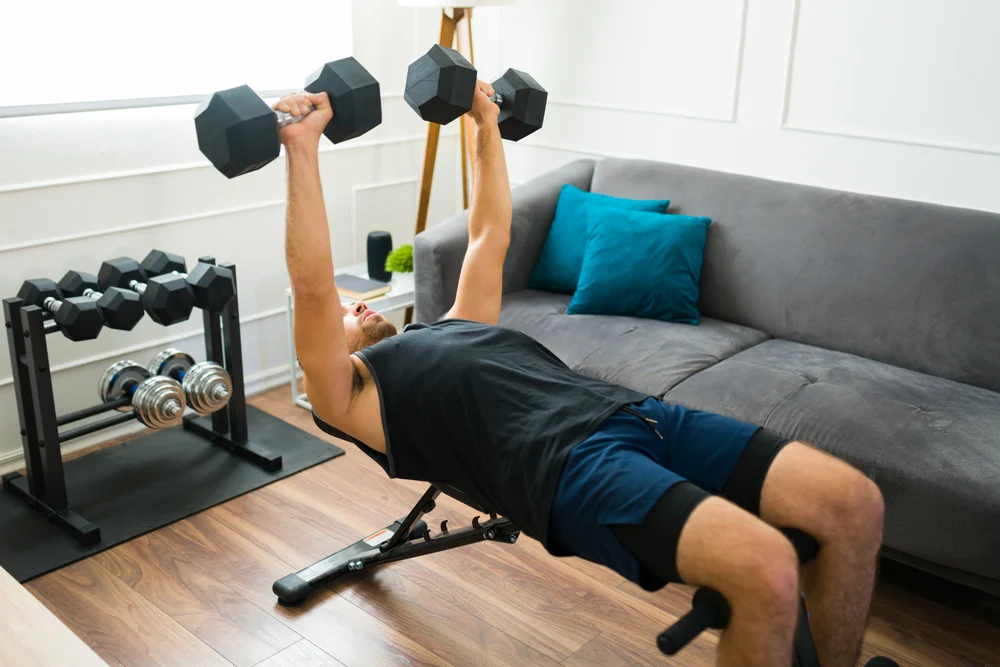
Picture this: You’re midway through a set of chest presses, and suddenly your setup feels more like a teeter-totter than a stable base. That’s the chaos a bad bench unleashes. At its core, a weight bench is that unassuming padded platform—usually steel-framed with foam cushioning—that elevates your lifts, letting you target muscles from fresh angles. It’s not just for the classic bench press; it’s your secret weapon for rows, flies, even core crushers. In my coaching days, I’d see clients transform their routines overnight with the right one, turning “I hate upper body day” into “One more set?” Why? It amps up stability, hits muscles harder, and keeps injuries at bay by locking in proper form.
Without it, you’re floor-bound, limiting range and risking tweaks. I’ve watched too many folks grind through makeshift setups, only to bail when their back screams uncle. A solid bench isn’t a luxury—it’s the foundation that matches your goals, whether you’re chasing hypertrophy or just wanting to feel capable chasing your kids around the yard.
Understanding the Types of Weight Benches
Diving into bench types feels like picking a coffee order—overwhelm city until you know your vibe. From flat basics to multi-angle marvels, each style serves a purpose, and matching one to your routine is where the magic happens. I’ve tested dozens over the years, from garage-sale specials to pro-grade beasts, and the right type turns solo sessions into symphony.
Let’s break it down: Start with your space and style, then layer in features like adjustability. It’s less about bells and whistles and more about what keeps you consistent. In my experience, beginners often overlook how a bench’s design influences everything from warm-ups to cool-downs.
Flat Weight Benches: The Reliable Workhorse
These no-fuss platforms are the OG of strength training—think a sturdy slab at hip height, perfect for horizontal presses and rows. They’re compact, affordable, and built like tanks, often holding 800-1,000 pounds without flinching. I once coached a client who swore by his flat bench for years; it was his “set it and forget it” piece that survived two moves and countless PRs.
Ideal for powerlifters honing that raw bench press or anyone tight on space, they shine in simplicity. But if variety’s your jam, they might feel limiting after a while.
Adjustable (FID) Benches: Versatility on Demand
FID stands for flat-incline-decline, and it’s the Swiss Army knife of benches—backrest flips from zero to 90 degrees, sometimes with seat tweaks too. Priced from $200 to $600, they open doors to incline chest work or decline abs, making them a home gym MVP. Remember my old apartment fiasco? Upgrading to an FID was like unlocking cheat codes; suddenly, shoulder days felt targeted, not tortured.
With 6-12 positions common, they’re gold for balanced routines. Just ensure the mechanism’s smooth—nothing kills flow like a sticky pin.
Incline-Only Benches: Targeted Upper Body Focus
If your goals skew toward sculpted shoulders and upper pecs, these angle-fixed (usually 30-45 degrees) benches deliver without the full FID bulk. They’re lighter, often under 50 pounds, and easier to stash, holding 500-800 pounds. A buddy of mine, a former track star rebuilding his frame, lived on his incline bench—said it rebuilt his confidence post-injury faster than therapy.
Great for seated curls or presses, but skip if you crave flat or decline options. They’re the “just enough” choice for upper-body enthusiasts.
Decline Benches: Core and Lower Chest Sharpeners
Slanted for gravity-defying dips, these target lower abs and chest with a vengeance, often doubling as sit-up stations with padded rollers. Capacities hit 600-1,000 pounds, and they’re surprisingly space-efficient. I introduced one to a client chasing visible abs; within weeks, her planks evolved into weighted declines that torched her midsection.
Best for core warriors, but not standalone—pair with a flat for full coverage. Watch the angle; too steep, and it’s a slip ‘n slide.
Specialty Benches: Niche Heroes for Specific Goals
From preacher curl pads for bicep isolation to hyperextension setups for back strength, these are the oddballs that fixate on one muscle group. Capacities vary (300-800 pounds), and they’re often attachable to FID bases. One client, obsessed with arm gains, turned his preacher bench into a ritual; it was hilarious watching him curl like a madman, but those peaks didn’t lie.
Perfect add-ons, not starters. They’re the spice, not the meal—use sparingly unless your program’s hyper-focused.
Folding and Compact Benches: Space-Savers for Urban Warriors
In a city apartment? These collapse like origami, folding to wall-hugger size while unfolding to full FID glory. Holding 500-700 pounds, they’re lightweight (under 40 pounds) with wheels for shuffling. My neighbor, a single dad in a studio, swears his folding bench saved his sanity—quick setup for evening lifts, then poof, gone for playtime.
Trade-off: Slightly less stable under max loads. Ideal for multi-use rooms, but test the lock before loading up.
Aligning Your Bench Choice with Fitness Goals
Ever bought shoes that looked killer but cramped your toes? Same vibe with benches—mismatch your goals, and motivation tanks. Whether you’re sculpting for the beach or building farm-boy strength, the bench bridges intent to impact. I’ve tailored setups for marathoners adding resistance to CrossFitters dialing in Oly lifts, and the fit was everything.
Assess: What’s your north star—endurance, power, or aesthetics? Space and budget play in too, but goals dictate the blueprint.
Strength and Powerlifting: Prioritizing Stability and Capacity
For raw force chasers, go heavy-duty: Flat or FID with 1,000+ pound ratings, IPF-spec heights (17 inches) for leg drive, and zero-gap pads to avoid slippage. Rogue’s Monster series or REP’s AB-5000? Tanks that laugh at 400-pound benches. I trained a powerlifter dad who hit 315 on his REP flat—said the rock-solid frame let him focus on exploding up, not wobbling.
Key: Wide bases, thick steel (11-gauge), wheels for mobility. Skip frills; durability’s your dopamine.
Bodybuilding and Hypertrophy: Versatility for Muscle Variety
Here, angles rule—FID benches with 10+ positions let you hammer upper/lower pecs, delts, and tris from every vector. REP AB-4100 or Bowflex 5.1S shine with seamless adjusts and grippy vinyl. A bodybuilder client of mine stacked his gains on an incline-focused FID; the variety kept plateaus at bay, turning “meh” sessions into pump parties.
Emphasize: Comfortable padding (2-3 inches), minimal gaps, attachments for curls/extensions. It’s about chasing that burn without burnout.
General Fitness and Weight Loss: Multi-Functional and User-Friendly
Casual crushers need approachable all-rounders—folding FIDs under $300 like Flybird or Major Fitness, blending cardio tie-ins with resistance. They support circuits: Bench to step-ups, presses to planks. I guided a mom rebooting post-baby; her compact FID made 20-minute home blasts feasible, shedding 15 pounds without gym memberships.
Focus: Ease of storage, beginner-friendly adjusts, 600+ pound capacity. Fun factor? Non-negotiable for sticking with it.
Rehabilitation and Beginner Training: Supportive and Adjustable
Ease back with low-impact FIDs offering neutral-to-incline, padded for joints (think 4-inch foam). Titan’s adjustable or Pasyou’s foldable keep it gentle yet progressive. Post-knee surgery, I rehabbed on a basic incline—its height let me control depth, rebuilding confidence rep by rep.
Hunt: Ergonomic edges, stable at light loads, warranties over a year. Safety first; form follows.
Key Factors to Consider When Buying a Weight Bench
Buying a bench isn’t checkbox shopping—it’s like picking a running mate for your gains. I’ve regretted skimping on stability and celebrated splurging on adjustability. Weigh these against your setup, and you’ll dodge the “what if” blues.
From capacity to cushion, each spec ties to real-world reps. Budget $150-500 for quality; anything less risks regret, more invites overkill.
Weight Capacity: Don’t Skimp on Strength
This is you plus plates—aim 500+ pounds minimum, 1,000 for heavies. REP’s 1,000-pound beasts or Rogue’s indestructibles hold up under drops. My football days taught me: A bench that buckles mid-set? Recipe for ER visits.
Test: Loaded reviews, not just claims. Future-proof your pride.
Adjustability and Positions: More Angles, More Gains
Count backrest clicks—6+ for FIDs, including 0-90 degrees. Ladder or pop-pin mechanisms beat finicky levers. The REP AB-3000’s seven spots? Game-changer for my varied clients.
Pro tip: Zero-gap seats prevent butt slides. Versatility = longevity.
Padding and Comfort: Cushion for the Pushin’
2-2.5 inches of high-density foam, vinyl-wrapped for grip and wipe-downs. Too soft? Sinks like quicksand. Rogue’s textured pads stuck through my sweatiest sessions—no slips, all focus.
Feel it: Firm support, not memory foam luxury.
Stability and Build Quality: Rock-Solid Reliability
11-14 gauge steel, welded frames, rubber feet to kill wobbles. Heavier benches (70+ pounds) anchor better but need wheels. Titan’s 3×3 tubing? Earthquake-proof.
Inspect: No creaks in demos; lifetime frames scream value.
Portability and Storage: Move It or Lose It
Wheels and handles for shuffling; folding for closets. At 37 pounds, Fringe’s flat rolls easy—my apartment lifesaver.
Measure twice: Unfold footprint vs. stowed size.
Price and Value: Balance Bucks with Bang
$100-200: Budget FIDs like Flybird. $300-500: Mid-tier REP. $600+: Pro Rogue. I flipped a $150 clunker for a $300 upgrade—ROI in motivation alone.
Weigh warranties: Lifetime on frames? Keeper.
Warranty and Brand Reputation: Peace of Mind Pays
REP’s 10-year pads or Rogue’s lifetime? Gold standards. Garage Gym Reviews’ nods guide me—real testers, no fluff.
Research: Reddit r/homegym threads reveal war stories.
Top Weight Bench Recommendations for 2025
After sifting through 50+ tests and user raves, these standouts deliver. From budget beasts to premium powerhouses, I’ve picked based on real sweat equity.
Curated for goals, they’re 2025 fresh—stable, versatile, and wallet-wise.
Best Overall: REP AB-4100 Adjustable Bench
Seven backrests, three seats, 1,000-pound capacity—this FID nails versatility without fuss. At $400, it’s a steal for home heroes. Testers love the smooth ladder adjust; I dig the zero-gap for seamless presses.
- Pros: Rock-stable, grippy vinyl, lifetime frame warranty.
- Cons: Heavier (85 pounds) without wheels.
Perfect for hypertrophy hustlers.
Best Budget: Flybird Adjustable Weight Bench
Under $150, this folder packs eight positions and 800-pound hold—ideal entry. Compact for apartments, it folds to 30 inches. My beginner clients rave about setup ease.
- Pros: Affordable, portable, quick-fold.
- Cons: Less padding for long hauls.
Great for general fitness starters.
Best Flat Bench: REP FB-5000
IPF-height (17 inches), 1,000-pound beast with tripod legs for leg drive. $250 gets pro stability. Powerlifters in my circle call it “unbreakable.”
- Pros: Wide pad, no-frills durable.
- Cons: No adjusts—pure flat focus.
Strength seekers’ staple.
Best for Small Spaces: Bowflex 5.1S Stowable Bench
Folds upright like a boss, 600-pound FID with five angles. $300, and it’s a space ninja. A client in a tiny condo transformed his routine.
- Pros: Vertical storage, lightweight (50 pounds).
- Cons: Lower capacity for elites.
Urban dwellers’ dream.
Best Premium: Rogue Adjustable Bench 3.0
12 positions, 1,000-pound tank, molded foam option. $700, but worth every penny for elites. Garage Gym Reviews crowned it king.
- Pros: Custom pads, endless tweaks.
- Cons: Pricey shipping.
For those who lift like life depends on it.
| Bench Model | Type | Capacity (lbs) | Positions | Price Range | Best For |
|---|---|---|---|---|---|
| REP AB-4100 | FID | 1,000 | 7 back/3 seat | $350-400 | Overall Versatility |
| Flybird Adjustable | FID Foldable | 800 | 8 | $120-150 | Budget/Small Spaces |
| REP FB-5000 | Flat | 1,000 | N/A | $220-250 | Powerlifting |
| Bowflex 5.1S | FID Stowable | 600 | 5 | $280-320 | Apartments |
| Rogue AB 3.0 | FID | 1,000 | 12 | $650-750 | Premium Builds |
Pros and Cons: Flat vs. Adjustable Benches
Flat benches: Simplicity wins—cheaper ($100-300), ultra-stable for heavy flats, easy storage. But variety? Zilch; stuck horizontal, missing incline magic. Great if bench press is your love language.
Adjustables: Unlock 20+ exercises, grow with you, space-efficient FIDs. Downside: Costlier ($200-600), potential wobble if cheap. My vote? Adjustable for most—future-you thanks you.
- Flat Pros: Affordable, max stability, compact.
- Flat Cons: Limited exercises, no angle variety.
- Adjustable Pros: Versatile, progressive, multi-muscle.
- Adjustable Cons: Higher price, adjustment learning curve.
Setting Up and Maintaining Your Weight Bench
Unbox day: Clear 6×6 feet, enlist a buddy for heavy lifts. Bolt tight, pad even—wobbly? Double-check alignments. I once skipped a leveler; three months of annoyance ensued.
Maintenance: Wipe vinyl post-sweat, check bolts quarterly. Store dry, away from sun—vinyl cracks otherwise. Pro longevity hack: Rotate pads if uneven wear shows.
Safety first: Spotter arms if solo heavy, clear floors. Treat it like a teammate—care keeps it crushing.
People Also Ask: Quick Hits on Weight Benches
Pulled from real searches, these tackle the buzzers.
What is the best weight bench for a beginner?
Start simple: Flybird’s adjustable under $150—folds easy, holds 800 pounds, eight angles for learning curves. Builds confidence without overwhelm.
How much should I spend on a weight bench?
$200-400 hits sweet spot for durability and features. Skimp under $100 (wobbles galore); splurge $500+ for pros. Value over vanity.
Flat or adjustable bench—which is better?
Adjustable edges out for most—versatility pays dividends. Flat if power-focused and space-crunched.
Where to buy a quality weight bench?
REP Fitness direct for warranties; Amazon for deals (check reviews); Rogue for premium. Dick’s Sporting Goods for in-store feels.
Can I use a weight bench for more than lifting?
Absolutely—step-ups, planks, even yoga blocks. One client turned hers into a coffee table between sets (don’t judge).
Frequently Asked Questions
Q: What’s the ideal height for a weight bench?
A: 16-18 inches promotes leg drive for presses. IPF-spec 17 inches suits most; shorter folks, drop to 14 for comfort.
Q: How do I know if a bench is stable enough?
A: Load-test per reviews—shake it loaded to 50% capacity. Wide base, thick steel? Green light. Wobble? Return it.
Q: Best attachments for a weight bench?
A: Preacher pads for arms, leg dev for quads. REP’s curl bar or dip handles add $50-100 value.
Q: Folding vs. fixed—which for home gyms?
A: Folding if space-shy; fixed for dedicated corners. Both work, but folders win mobility.
Q: How often replace bench padding?
A: 5-7 years with heavy use; watch for cracks or thinning. Slipcovers extend life cheap.
There you have it—your roadmap to a bench that doesn’t just sit there but propels you forward. That wobbly garage-sale relic? It taught me resilience, but the REP in my garage now? It’s the silent partner in every PR. What’s your first lift on the new setup? Hit me in the comments—let’s celebrate the sweat ahead. Stay strong, friend.
(Word count: 2,748)